
Sense Organs Worksheet 01
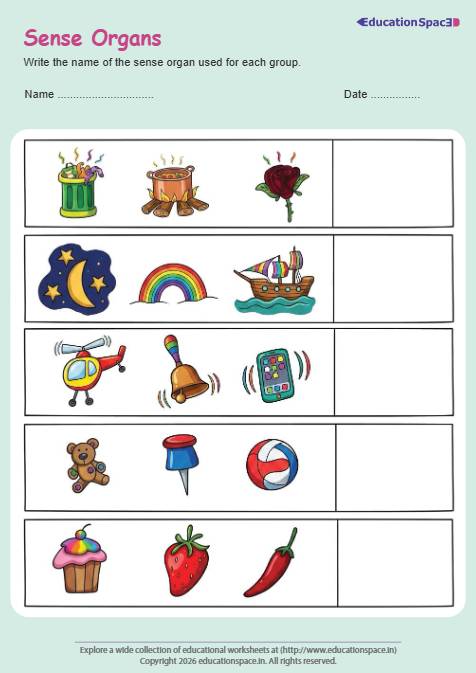
Explore Your World with the Sense Organs Worksheet
The Sense Organs activity is an essential science resource designed to help children understand how they interact with their environment through their five senses. By grouping familiar objects based on sensory experiences, students learn to identify which organ is responsible for processing different types of information.
Key Benefits:
- Scientific Categorization: Teaches children to classify objects into five distinct groups based on the primary sense used to perceive them.
- Biological Awareness: Helps students name and locate the key organs—eyes, ears, nose, tongue, and skin—and understand their vital functions.
- Environmental Interaction: By using examples like a ringing bell for hearing or a spicy chili for tasting, the worksheet connects classroom learning to real-world experiences.
- Critical Thinking: Challenges learners to analyze an object and determine which sensory input is most relevant (e.g., recognizing that a rainbow is something we see).
- Vocabulary Development: Introduces and reinforces descriptive words related to sensory experiences, such as "fragrant," "loud," "soft," or "sweet."
- Visual Literacy: The use of bright, clear illustrations helps young learners who are still developing their reading skills to participate fully in the lesson.
This engaging activity provides a foundational understanding of human biology and the amazing ways our bodies collect information from the world around us.